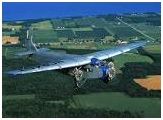
The Ledger has an article about flying the Winged Winnebago Tri-motor.
Volunteers needed
We need volunteers for the following events. Check that your sign-up details are correct, and that you’re signed up for everything you thought you were. Blank spaces are where we still have opportunities!
5/2 09:00 – 14:00
Car show with Dusty – Century 21 parking lot
801 Sterling Parkway, Lincoln
- Tony Kasabasich
- John Perry
- Tom Lieb
- Dug Smith
5/5 17:00 – 20:00
Lincoln Food Truck Night
Beerman downtown plaza, Lincoln
- Steve Campbell
- Bob Butera
5/9 08:30 – 14:00
Parents Resource Guide
Lincoln Community Centre, 2010 F Street, Lincoln
- Bob and Patti Miller
5/15 17:00 – 20:00
Roseville Food Truck Night
Vernon Street, Roseville
- Tom S
- Rich Ryan
5/20 17:00 – 20:00
Folsom Foodtruck Night
Folsom Zoo
- Evan Strasser
- Mike Haag
5/23 09:00 – 14:00
Home Depot
1000 Groveland Lane, Lincoln
- John Perry
You can still volunteer for this opportunity!
5/28 17:00 – 20:00
Rocklin Food Night
Rocklin Johnson Springview Park
- Evan Strasser
You can still volunteer for this opportunity!
5/31 09:00 – finished
Tri-motor hangar cleanup
- Tom Lieb
- Steve Campbell
- Gary Boothe
- Dug Smith
You can still volunteer for this opportunity!
6/2
Downtown Lincoln with Dusty
- Tom Lieb
- Bob Butera
You can still volunteer for this opportunity!
6/5 15:00 – 20:00
Rods and Relics Car Show
Thunder Vallay Casino
- Larry Bontrager
- Scott Thompson
- Evan Strasser
You can still volunteer for this opportunity!
March membership meeting on Wednesday 15th
Wednesday isn’t just tax day, it’s also our monthly Chapter Meeting. We are back ON with Summer time BBQ’s. Dinner should be close to 18:00, with the meeting following at 19:00. Hope to see you all there, at Tony’s (North side, closest to the taxiway) hangar.
RIP Hugh Crawford
With extreme sadness that Ivan Karnezis informs us that last Friday afternoon, while working at the Sacramento Railroad Museum, Hugh Crawford had a massive heart attack and died. Hugh was a great friend, an interesting and fun conversationalist, a dependable Young Eagles worker, master BBQ chef, contributing Board Member, hard working Membership Chairman, and the one who always contacted the Chapter 526 membership. We will all miss him.
Hugh’s wife, Alice has invited all of you and past members and friends to Hugh’s Memorial at the Railroad Museum in Old Sacramento: 17:00, May 2.
A dinner will be served. Please RSVP to Alice.
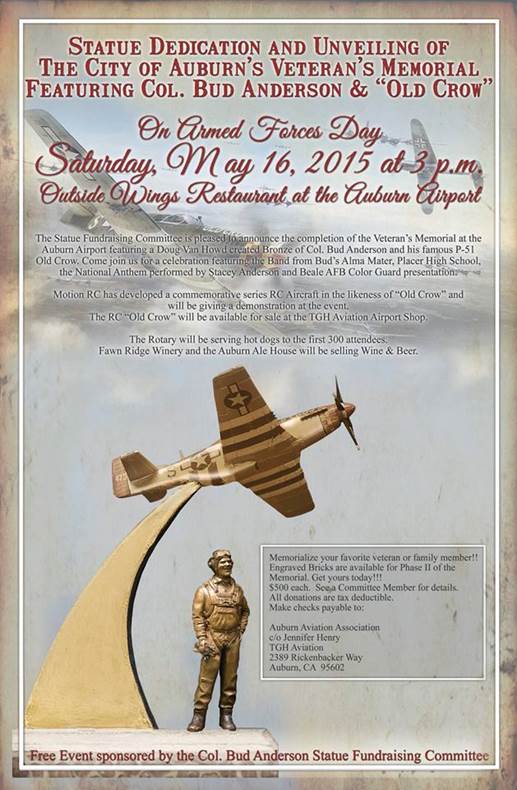
Bud Anderson to be honored at Auburn
Bud Anderson (the author of “To Fly and Fight.”), a WWII triple ace (50th highest U.S. ace with 16-1/4 kills), will be honored by the dedication of a statue at Auburn airport on Saturday, May 16 at 15:00.
Tri-motor meeting April 8th
We continue to fine tune our Tri-Motor event, and there will be another meeting this Wednesday, April 8, at Pizza Roundup, 2270 Nicolaus Rd., Lincoln, 18:00.
Tri-motor flights are bookable
Young Eagles event on Saturday
As most of you will recall from the last chapter meeting, this Saturday is the Young Eagles event at LHM. Beside the pilots, volunteers are needed for escorts, gate duty, etc…
Anyone who wishes to participate should report to the gazebo near the fuel pumps at 08:00. The event is scheduled to run from 9 am – 1 pm.
April board meeting on Wednesday
Tomorrow night, April 1, will be our April Board of Directors meeting. Meeting time will again be at 18:30, with optional dinner at 18:00. As usual, we will be meeting at Pizza Roundup, 2270 Nicolaus Rd., Lincoln.
Any and all are invited…
Insurance – Now You See It, Now You Don’t
“Insurance – Now You See It, Now You Don’t”
Topic: Insurance, Now you see it, now you don’t
On Saturday April 11, 2015 at 10:00 Pacific Daylight Time
Location:
EAA Hut – West side of airport
3025 South Street
Q Hut EAA 157
Redding, CA 96001
Description:
Mr. Charles Finkel, noted aviation attorney will discuss the various aspects of aviation aircraft insurance… and how it may impact how you fly (i.e. the decisions one might make because of what type and quantity insurance you have on the the aircraft, rental or owned).
This will be the 106th monthly CONSECUTIVE safety seminar at Benton airport since the inception of the new FAASTeam concept.
To view further details and registration information for this seminar, click here.